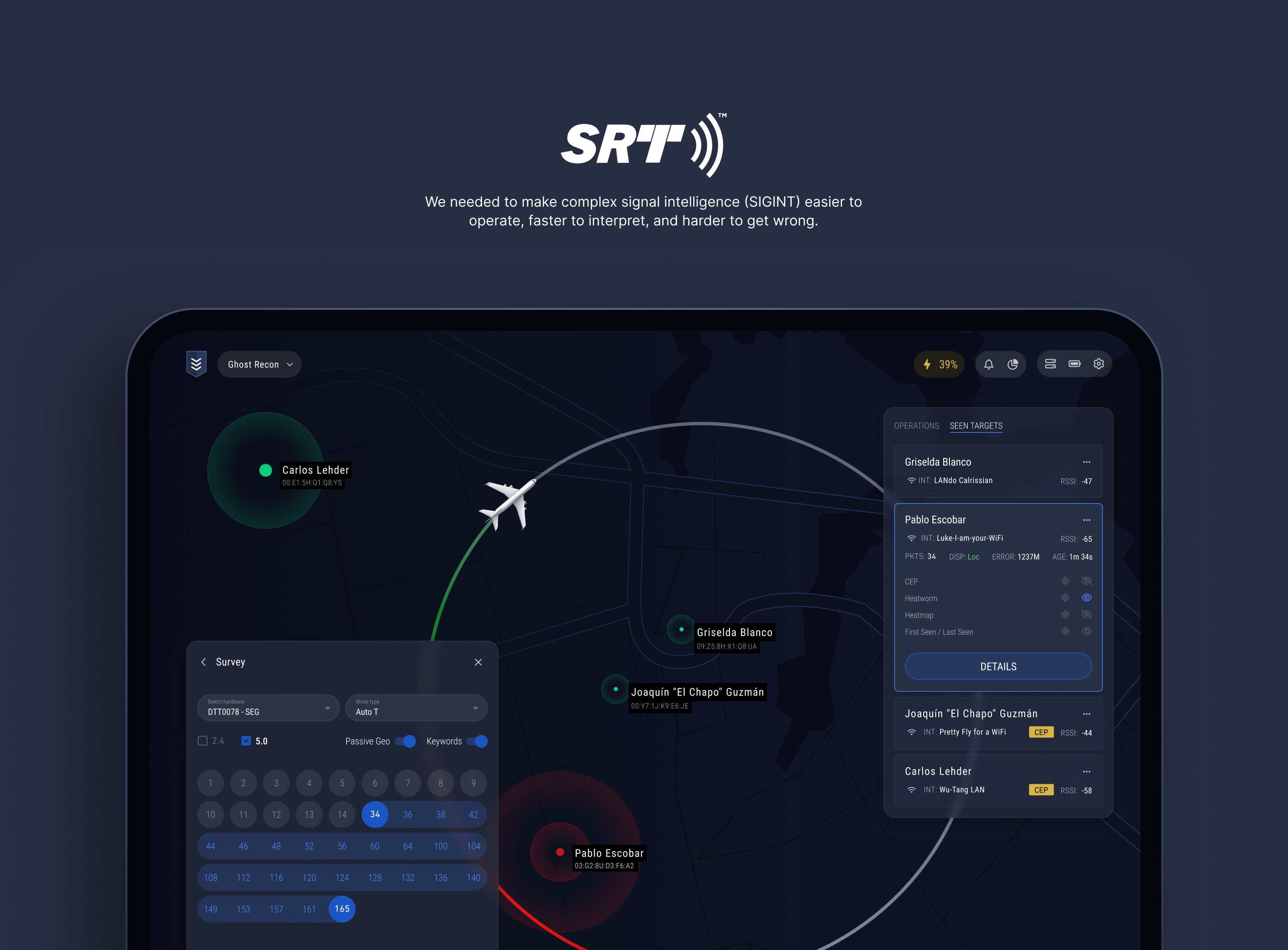

SRTs flagship product, Mission Manager, turned complex wireless intelligence into a mission-critical platform, giving operators the tools to detect, interpret, and act on signals across highly technical environments.
But that capability was only valuable if operators could make sense of it quickly. Fragmented workflows, dense information, and inconsistent interaction patterns created unnecessary cognitive load in situations where clarity and speed mattered most.

Research & Discovery
As the platform grew in success, a critical issue surfaced: new features were developed in silos, each with distinct workflows and UI patterns. This fragmented experience placed a heavy cognitive burden on operators, who had to constantly adapt as they moved between tools and relearn them for every mission.
By engaging directly with operators, we identified where inconsistencies disrupted task flow. Their feedback guided the development of a unified UX strategy focused on clarity, consistency, and seamless interaction across all waveform solutions.

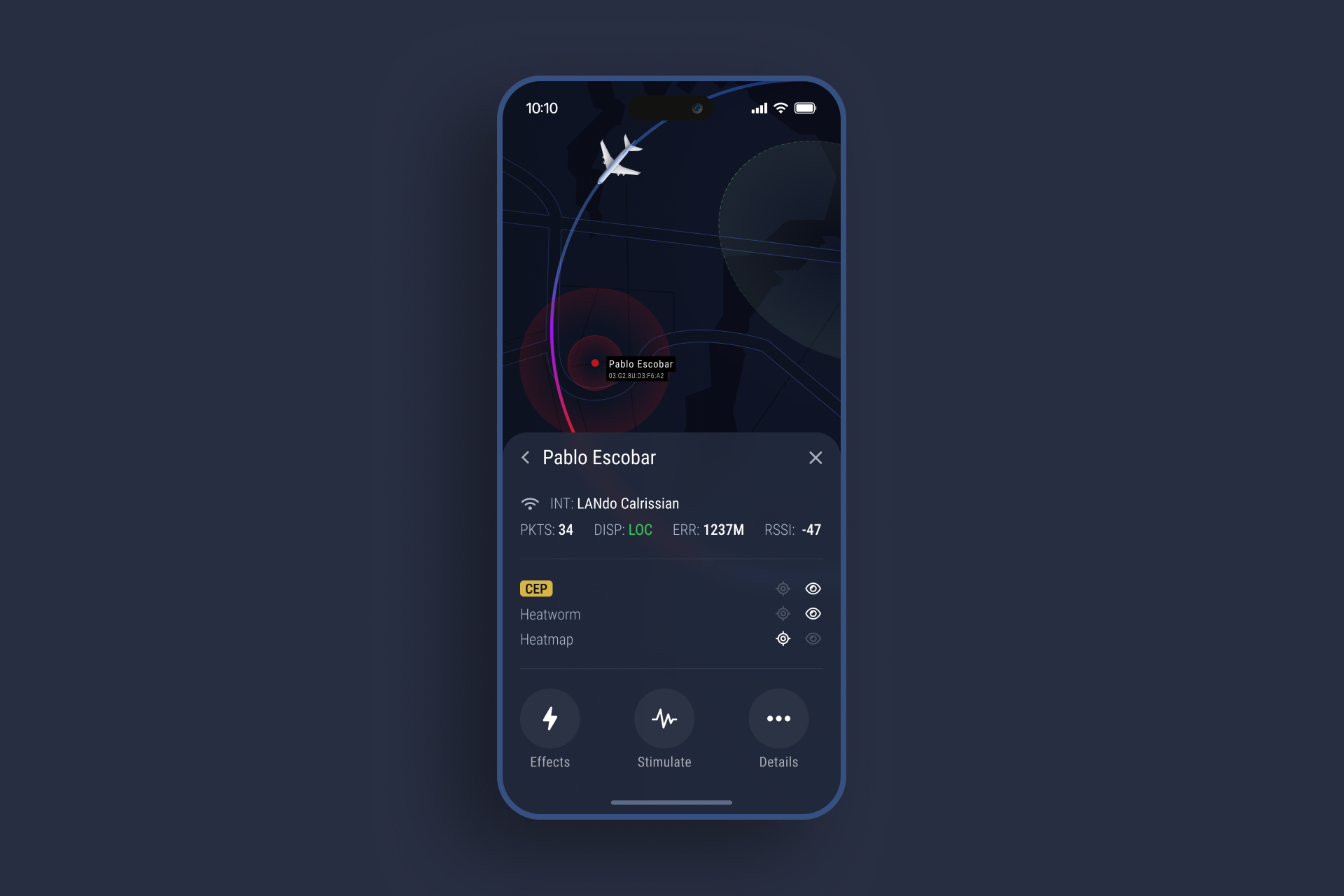
Design Principles
The new platform was architected from the ground up, purpose-built to support a growing suite of scalable waveform intelligence solutions. Each solution was redesigned with a shared UX framework, ensuring continuity in interaction models, visual language, and spatial awareness, whether operators were using mobile devices in the field or large displays in a command center.
Hardware Awareness
& Map-First Design
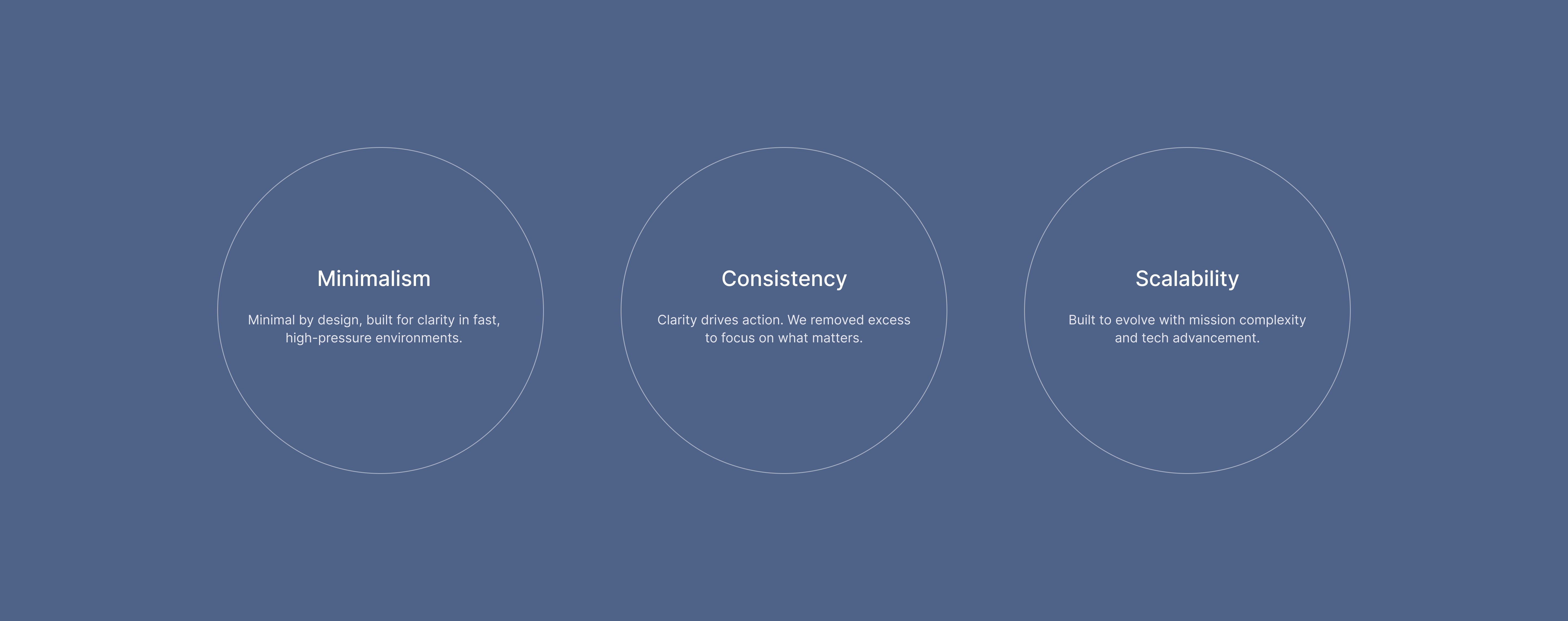
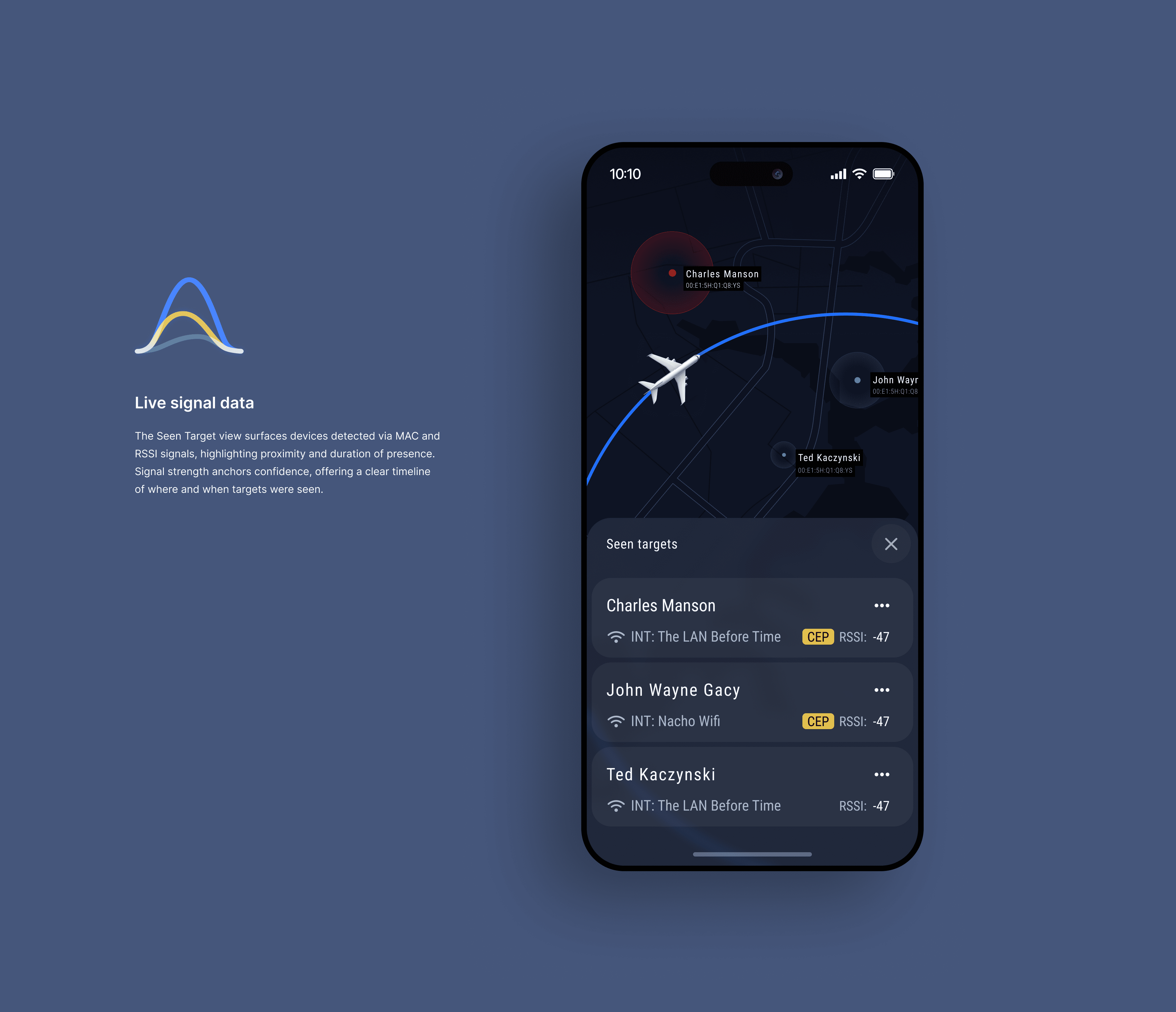
The Mission Manager platform leverages WiFi waveform signatures and RSSI values to detect and track nearby devices via their MAC addresses. This passive scanning is central to how the system understands proximity and movement.
In the redesign, we reimagined the platform as a map-driven application. The map is now the constant, always visible, always in context. Users had one clear request: keep the map front and center.
Hardware Settings
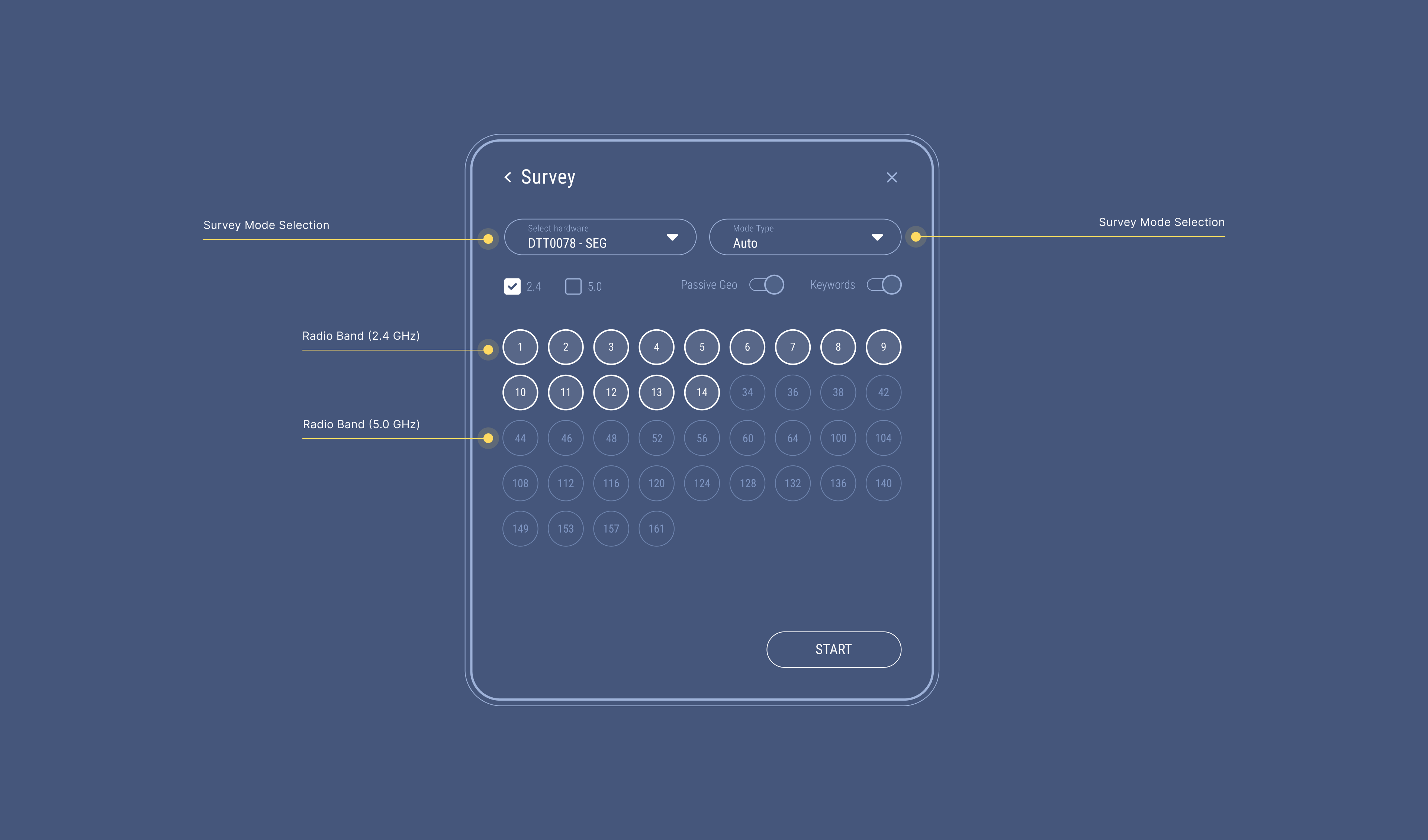
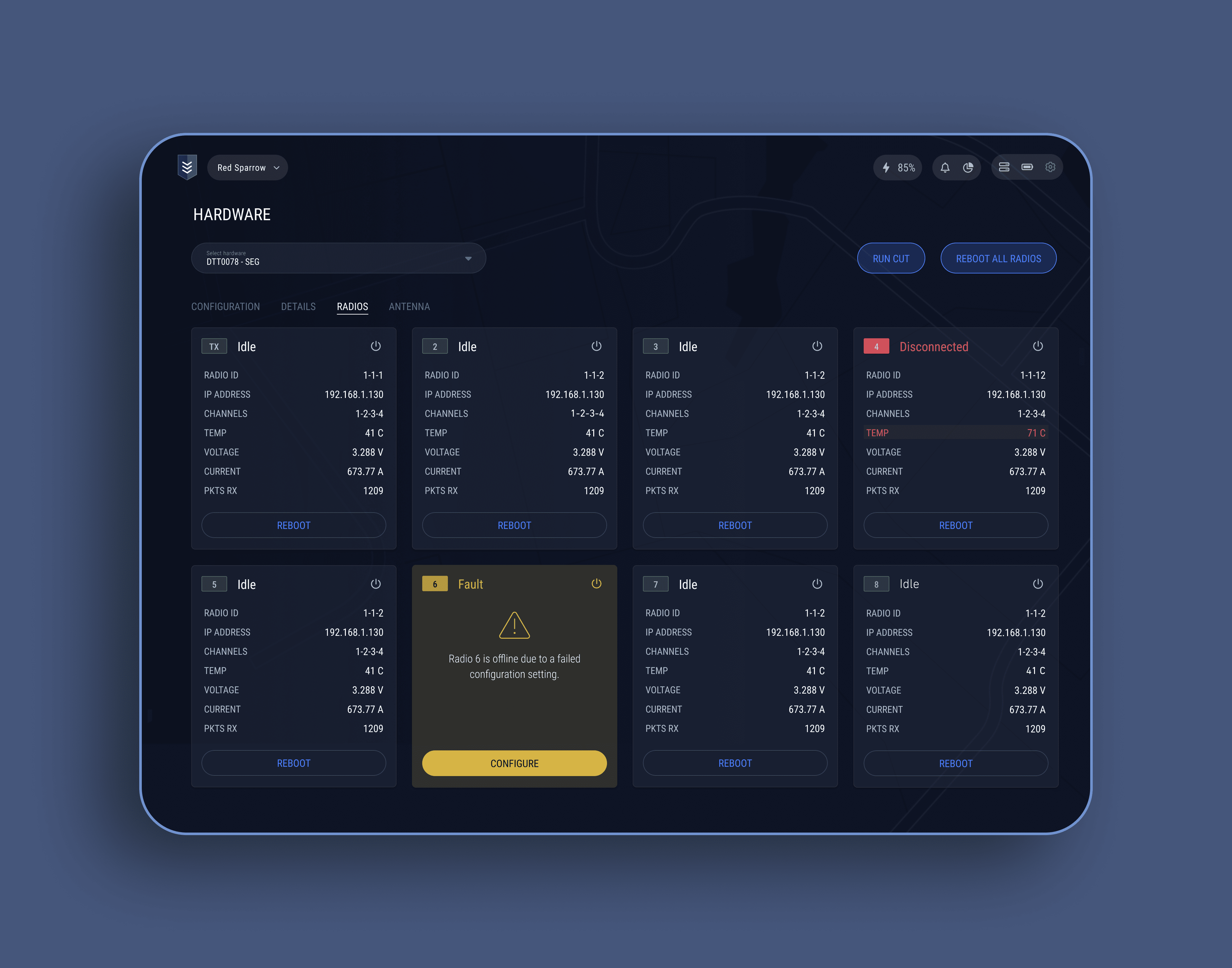
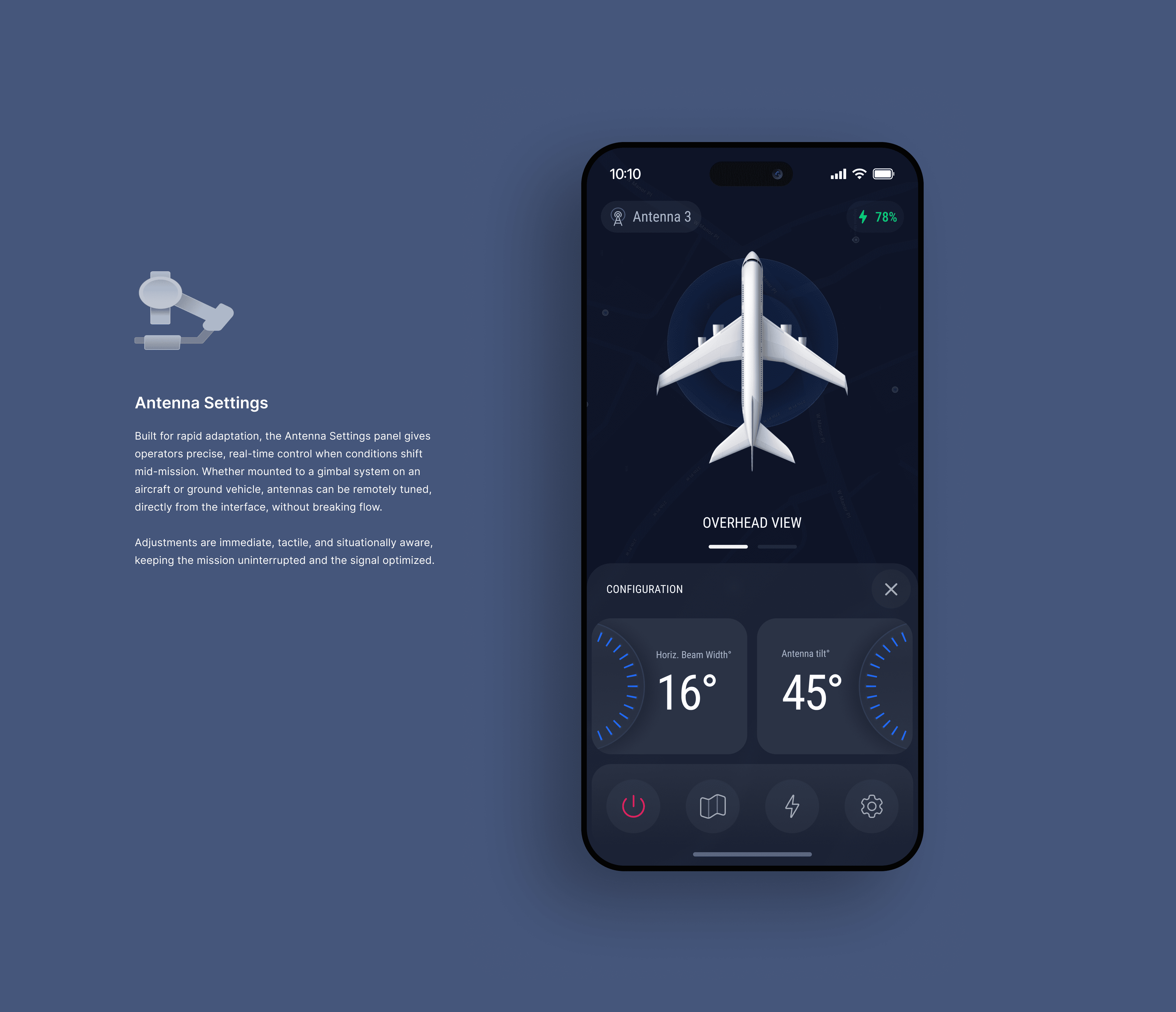
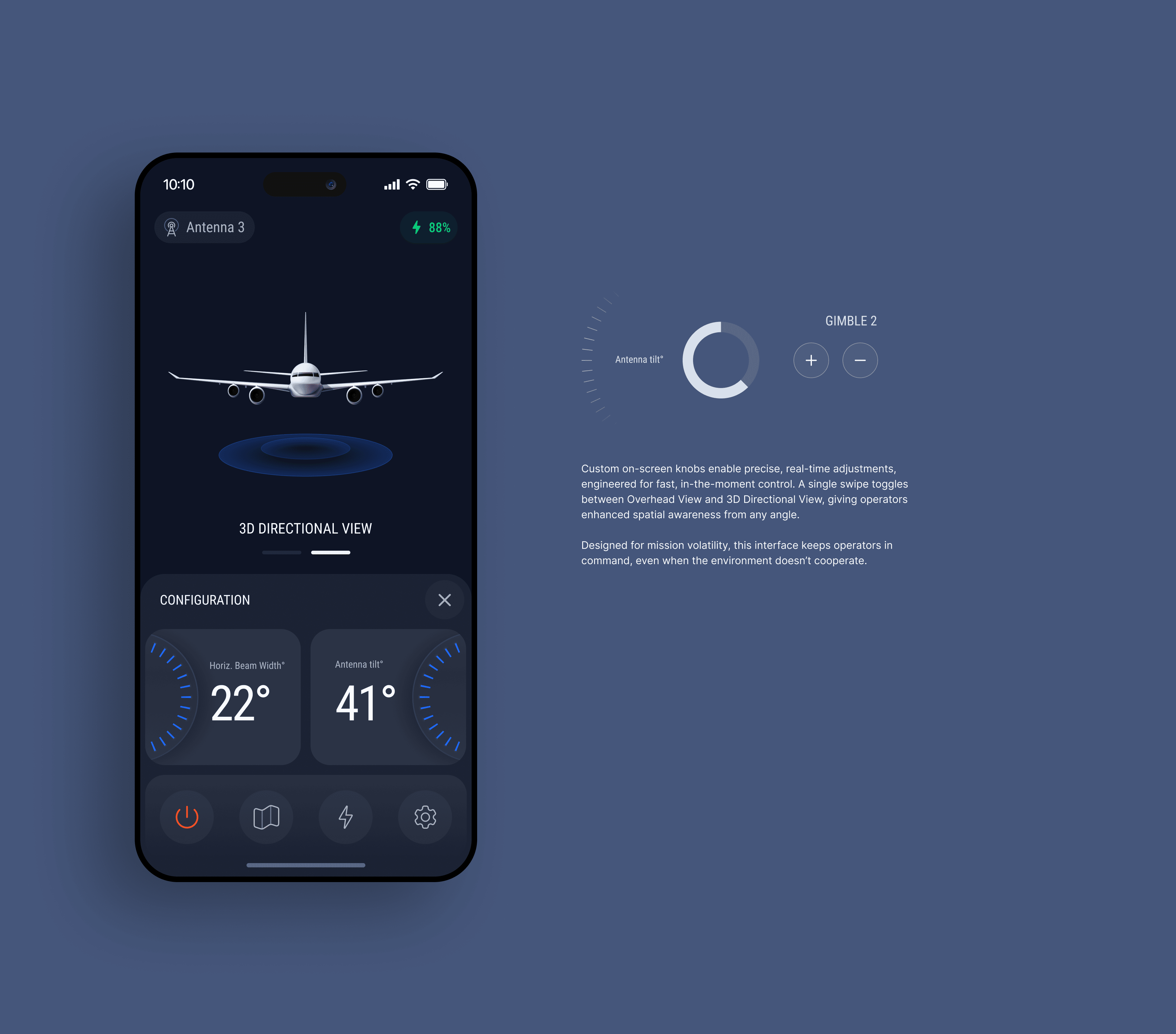
Mission profiles vary. So do hardware demands. The Admin & Configuration panel was designed to flex, supporting unique setups for each feature while maintaining a consistent, reliable pattern across devices and signals. Through close collaboration with subject matter experts, we iterated toward a system that balances control, clarity, and adaptability, critical for real-world deployment at scale.
Intelligence Made Intuitive
We preserved the depth of Mission Manager while removing the friction around it, turning dense intelligence workflows into a clearer, more predictable platform.
That shift made the platform easier to learn, faster to operate, and more dependable in high-stakes environments. New operators could navigate the experience with minimal training while experienced users retained the control and capability they depended on.
Selected Works